When you need to work safely and efficiently at height, you need the right aerial lift for the job. There are many different types of aerial lifts, such as scissor and boom lifts, to suit your operations. This buyers guide to aerial lifts will outline the key factors in selecting the right equipment, as well as comparing new and used options across all aerial lift types.
What Is an Aerial Lift?
An aerial lift is a mechanical device that enables workers to access high spaces to pick items, move materials, or work on out-of-reach fixtures. You may also see aerial lifts referred to as aerial work platforms (AWP) or mobile elevating work platforms (MEWPs).
In warehouses and distribution centers, aerial lifts help to maximize worker safety when they need to access stock on higher shelves. This is because they provide a stable platform to work on and can feature safety measures, such as restraint systems and lanyards for fall protection.
There is a wide range of aerial lift types, which can be electric, LP, dual-fuel, or diesel-powered.
Types of Aerial Lifts for Your Facility
Select the ideal aerial lift for your facility by matching it to your workspace and the intended use. Here, we have outlined the main types of aerial lifts and the applications for which they’re most suited.
Scissor Lifts
A scissor lift moves workers vertically using accordion-like arms to reach high working spaces.
There is a wide range of scissor lift types, including electric, LP, dual-fuel, and diesel options. Electric scissor lifts produce no fumes and can be quieter and lighter than their diesel counterparts. This can make them more suitable for use in sound-sensitive and indoor environments.
Scissor lifts provide a larger working platform compared to boom lifts, which can be useful for applications where you need to carry more materials or tools. You can also fit multiple workers on the platform.
Articulating Boom Lifts
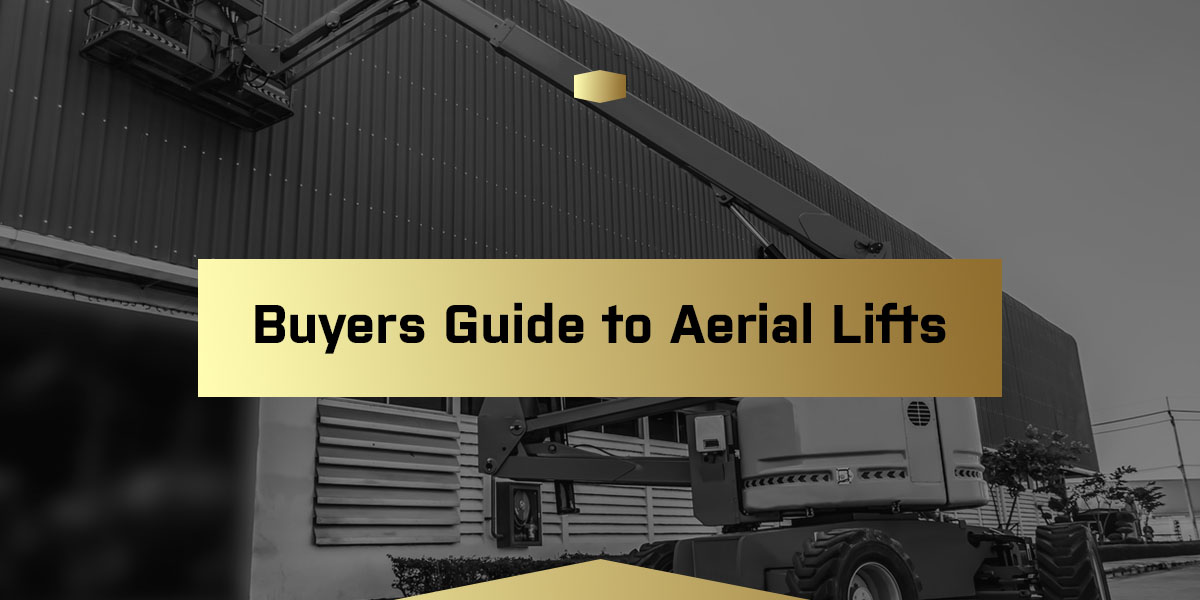
Articulating boom lifts have multiple joints or pivot points, allowing your workers to navigate obstacles such as machinery, shelving or other equipment while working at height. This is the right choice for when you need the capability to move up, over and out in congested working environments.
Telescopic Boom Lifts
For maximum horizontal reach, you should consider a telescopic boom lift. They have long, straight arms and can be extended through their boom sections to give your operators the highest working heights. Some leading brand models have working heights of up to 186 feet. There is a range of telescopic boom lifts with varying reaches and capacities to suit your facilities.
Unlike articulating boom lifts, telescopic boom arms can only move in a straight line because they lack the same joints or pivot points. So consider if you need a MEWP that can navigate obstacles or whether you need the greater reach and working height.
Aerial Platforms
Aerial platforms, also known as manlifts or push-arounds, provide a more compact solution for working at heights. They are typically the lightest and smallest type of aerial lift. You can set them up with just one operative. Their compact size means they can fit through narrower doorways and you can transport them more easily.

4 Key Factors Before You Buy an Aerial Lift
Before you purchase an aerial lift, you should consider how the machine will suit your working environment and manage loads. Then, when you have the ideal machine with the right specifications in mind, you have the option of buying/leasing new or used. Here are the key factors you’ll need to consider in your final decision.
1. Evaluate Your Application and Environment
Aerial lifts come in various types and specifications to suit different applications and environments. For example, for indoor use, you may opt for an electric lift, which produces zero toxic emissions. If you need to operate outdoors, there are aerial lifts that can handle rough terrain and are LP and diesel-powered, so you can keep working for longer.
You can also get hybrid aerial lifts that are dual-powered, meaning they can be multipurpose for indoor and outdoor applications. According to a leading aerial lift manufacturer, electric lifts can typically last a working day and recharge overnight, or they can be charged more quickly using a faster charger. Hybrid lifts can last for an entire working week on a single tank of fuel.
Most aerial lift types can operate on flat, concrete floors. For rough terrain, consider opting for a lift with four-wheel drive capability and traction control, especially if you need your lift to navigate steeper gradients.
2. Key Specifications
Each kind of aerial lift offers different working heights, reach and maximum load capacities, so prioritize the specifications that matter most to you.
The working height of an aerial lift is approximately 6 feet higher than the platform height, as this is the average reach of a human operator. For boom lifts, the working height combined with the reach determines the aerial lift’s overall range of motion, or working envelope.
Check the loads you want to move with your aerial lift, factoring in the weight of your operators, tools and materials. For boom lifts, double-check if the platform’s capacity is restricted or unrestricted. The unrestricted figure indicates the highest weight that the equipment can support in all areas of the machine’s range of motion.
3. Safety and Compliance
Be aware of American National Standards Institute (ANSI) and Occupational Safety and Health Administration (OSHA) safety requirements when you’re looking to buy an aerial lift.
For example, OSHA states that you should not alter the insulated portion of an aerial lift in any way that would affect its insulating value. Make sure you check any lift for any modifications, especially used lifts.
A key safety feature on all aerial lifts is the guardrail system, which acts as the primary protection against falls. In addition, you may also need secondary protection such as body harnesses or restraining belts.
4. New vs. Used Aerial Lifts
Decide whether a new or used aerial lift suits your business finances and goals better.
The key advantage of buying a new aerial lift is that you can access the latest technologies for maximum efficiency. You can also get a warranty in case of any breakdowns or faults.
Buying used aerial lifts can be a more cost-effective option if you want to maximize cash flow. You may be able to afford a higher spec aerial lift by buying a used model compared to a new one. When you buy a used aerial lift from a reputable dealer, you can find machines that have been properly inspected and tested, giving you more confidence that you’re making a reliable purchase.

Browse Quality Aerial Lifts at Fitzgerald Equipment Company
By using some of the key decision-making factors in this aerial lift guide, you can make the right choice for your business. Buying a new or used aerial lift can be a significant investment, so it is worth choosing a respected dealer whom you can trust. At Fitzgerald Equipment Company, we have over six decades of experience in providing quality material handling products across northern Illinois and southern Wisconsin. Browse our new aerial lifts or check our used stock today.