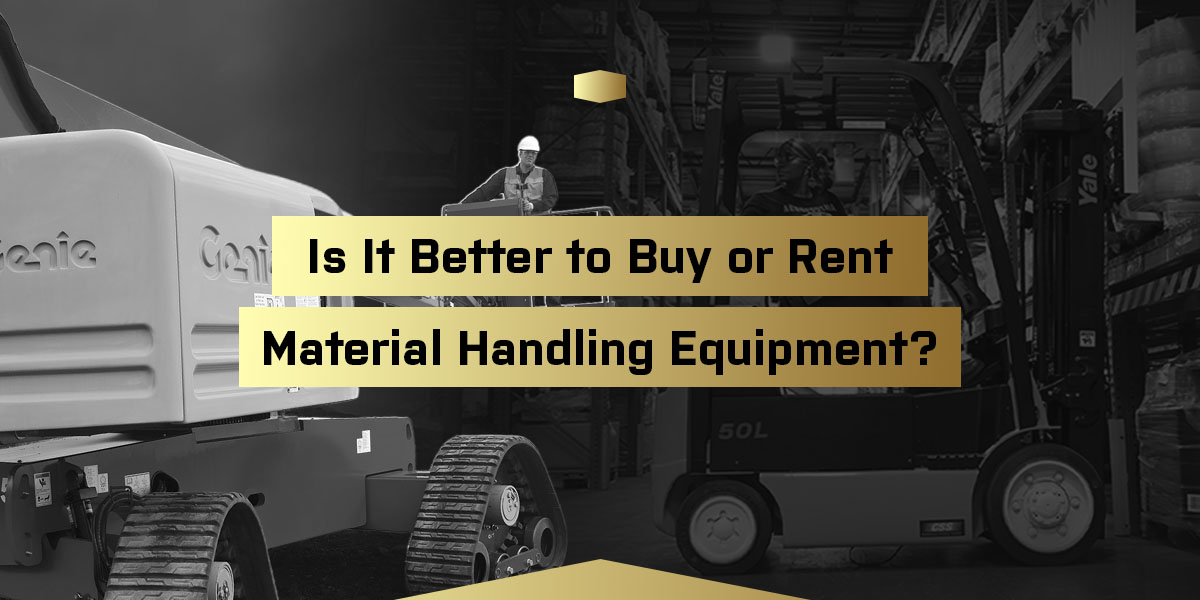
As a business or warehouse owner, you understand the importance of using the right equipment. An optimized fleet boosts productivity and increases worker safety. However, when it comes to selecting the right material handling equipment, one common question arises—should you rent or buy? Both options offer several benefits, but making the right decision can save you time and money in the long run.
Pros and Cons of Buying Material Handling Equipment
Expanding your fleet through purchasing new equipment can be an excellent choice for teams needing long-term or indefinite equipment use. Buying equipment can deliver benefits like:
- Lifetime savings: The initial investment for new equipment can be hefty, but businesses that use the same equipment frequently can see lifetime savings. Ownership becomes more economical than renting when you use the same equipment repeatedly, as you can avoid rental fees and associated costs. Additionally, after completing payment for a new purchase, your costs to own become limited to maintenance and repairs. You may also see additional financial benefits through depreciation and capital allowances.
- Control over customizations: Owning equipment provides complete autonomy over its use — you can modify, upgrade or alter machinery to fit your specific operational needs. You can also deploy equipment when you see necessary, without needing to consider equipment return dates or penalties. This control also extends to operator training, safety protocols and maintenance schedules, allowing you to optimize performance based on business needs.
- Asset ownership: Purchased equipment becomes a tangible asset for your business, which contributes to your overall worth by building equity. Owning equipment could improve borrowing power and financial standing with investors and lenders. Additionally, as an asset, your equipment will depreciate over time and provide tax advantages. If you no longer need the equipment, you can sell it to recoup some of your investment.
- Consistent availability: When you own equipment, you can feel confident in knowing it is available when you need it. Immediate equipment access can be crucial for meeting deadlines or handling unexpected demand increases. You do not have to rely on pickup or delivery timelines, and you can work without return constraints.
Before finalizing a purchase, it’s important to consider the potential drawbacks of owning equipment. While owning can deliver significant advantages, it’s not always feasible for every business. Some considerations include:
- Initial investment: Purchasing new equipment often requires a substantial upfront financial commitment. For businesses with tight budgets, this demand can strain cash flow and prevent teams from dedicating resources to other operational investments or unexpected expenses.
- Maintenance responsibilities: Owning equipment means your business is completely responsible for all maintenance and repairs. Owners must consider routine servicing requirements, compliance standards and worker safety when scheduling maintenance and repairs. You must also consider how downtime can impact your operations, as some maintenance can be time-consuming or require specialized tools or technicians. While rental companies typically handle maintenance needs, equipment owners must navigate these complexities to ensure safe and efficient equipment operation.
- Depreciation: Material handling equipment loses value over time due to wear and tear, market changes and technological advancements. While you can often receive tax benefits as equipment depreciates, it’s worth noting that depreciation also reduces resale value, which can impact financial statements. Additionally, if rapid technological advancements occur, you may need to invest in newer equipment sooner than you anticipated to remain competitive in your industry.
Pros and Cons of Renting Material Handling Equipment
Renting material handling equipment is common in the industry, as many teams find the enhanced flexibility and technology access to be a significant advantage. Rentals offer:
- Lower upfront costs: A significant advantage of renting is a lower upfront investment. Rentals eliminate the need for large initial capital outlays, which can be crucial for growing businesses or those with tight budgets. Additionally, many rental companies offer varying rental rates, depending on duration, allowing you to make a money-smart and business-effective decision.
- Flexibility: Renting can bring unmatched flexibility by allowing business owners to adjust equipment fleets as business needs change. Teams can easily navigate seasonal spikes and unexpected market changes by renting equipment to complete jobs efficiently. This adaptability can help businesses stand out against competitors while allowing you to avoid costs associated with underused equipment or storage during slow periods.
- Latest technologies: Rental companies frequently update equipment offerings to reflect technological advancements. Renting enables you to access these advancements at a fraction of the cost of purchasing. Leveraging these technologies can give you a competitive edge and deliver operational benefits by enabling your team to work safely and more efficiently.
- Included maintenance: Another benefit is the included maintenance. Many rental agreements include maintenance and repair services, putting the responsibility of routine services, inspections and component replacements on the rental provider. This convenience allows you to work with confidence while reducing administrative burden. Additionally, if setbacks occur, rental companies often deliver timely repairs or quick replacements to ensure you can keep operations running smoothly.
Of course, like buying, renting has some downsides. Business owners may face challenges over time, such as:
- Higher long-term costs: Renting can be incredibly cost-effective for short-term projects. However, rental costs and associated fees can add up over the long run. Businesses planning to use equipment for extended periods could end up exceeding the purchase price, ultimately harming their bottom line.
- Availability issues: Choosing to rent means becoming dependent on the availability of your rental company. While reliable providers will have ample models to choose from, it’s important to note that you could face issues during peak seasons. You could experience delays in availability or need to settle for less suitable alternatives to meet project deadlines if the equipment you want is unavailable.
- Usage restrictions: Most rental agreements come with specific terms and conditions regarding equipment usage. It’s common for agreements to outline how, where and who can use equipment. While these conditions aim to optimize equipment life and ensure worker safety, they can sometimes be limiting. For example, you may need to adhere to geographic boundaries or operating hour restrictions, which could hinder your ability to optimize performance.
When to Rent vs. Buy Equipment — Factors to Consider
While the pros and cons of renting and purchasing may give you a good clue about which option is right for you, it’s important to consider a few additional factors. Many businesses find success by blending rental and purchasing strategies. Be strategic about when to rent or buy to make the most impact on your business.

When to Rent Material Handling Equipment
Renting is best for meeting short-term needs. Consider renting if you want to:
- Try before you buy: Renting allows you to test various equipment makes and models before committing to a large investment. The try-before-you-buy approach enables you to test technologies and capabilities to inform later purchasing decisions while maintaining worker safety and project efficiency.
- Complete specialized projects: You can use rentals to expand your service offerings without expanding your fleet. If you want to tackle highly specialized projects or meet one-off demands, you can rely on rentals to complete projects without needing to invest in equipment you may not use again. This flexibility can give you a competitive advantage while improving your bottom line.
- Combat short-term demands: Renting is perfect for handling seasonal spikes, unexpected surges and temporary contracts. You can quickly scale up your fleet and with confidence and return to normal operations without a long-term commitment.
When to Buy Material Handling Equipment
Buying is best for businesses looking to use equipment long-term or teams looking to increase overall business value. If you operate with predictable workloads and plan on frequent use, buying can deliver the most benefits over time. It’s also worth noting that you can buy used material handling equipment to lower your initial investment costs while enjoying the long-term benefits of owning.

Find Material Handling Equipment for Rent or Purchase
Fitzgerald Equipment Company is your one-stop shop for equipment sales and rentals. We’re a family-owned business offering material handling equipment to teams in Illinois and southern Wisconsin. With us, you can:
- Buy material handling equipment online: Buy new or used equipment to meet operational needs. New inventory includes everything you need to operate a warehouse or distribution center, including industrial carts, aerial lifts, floor cleaning equipment and forklifts.
- Rent material handling equipment online: Meet surges in demand with reliable equipment rentals. Our convenient locations make it easy for you to access the critical equipment you need to maximize uptime.
Find your nearest Fitzgerald Equipment Company location to discover how we can help your business.