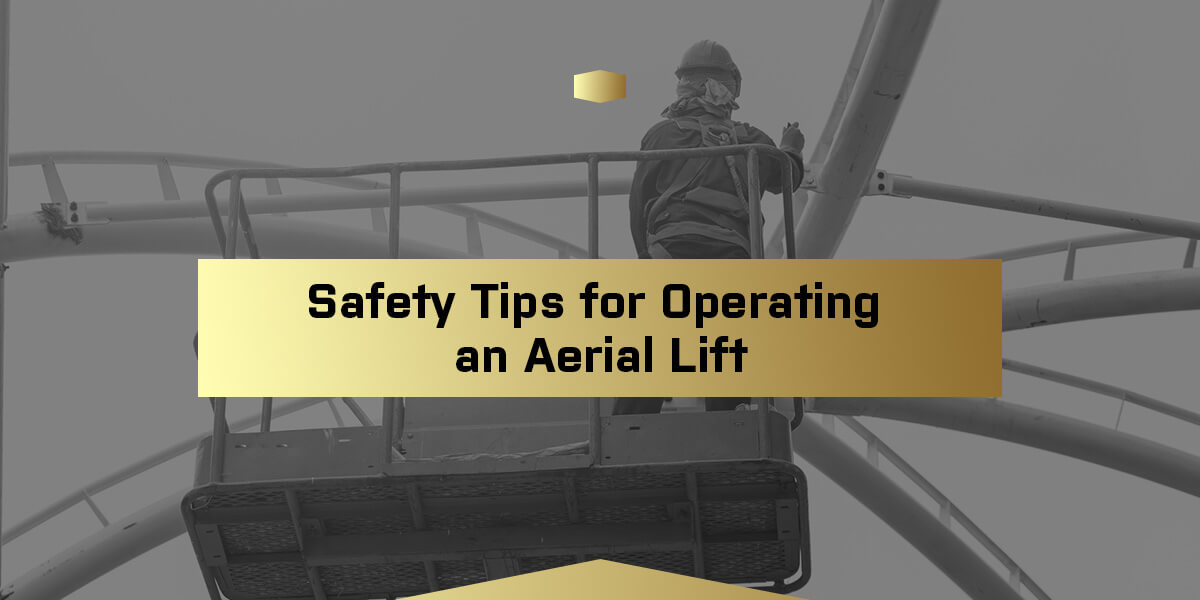
Your aerial lift is a key piece of equipment that gives your team a stable platform to work safely at height. Aerial lift safety is essential on many levels, helping you stay compliant with regulatory standards, keeping your workers safe, protecting your equipment from damage and avoiding common hazards to maximize uptime. Our guide outlines the most important aerial lift safety tips for your operations and prepares your workforce for the top safety risks.
Top Safety Hazards
Let’s start by identifying some of the most prevalent aerial lift hazards. These directly affect your workers and can be managed with safety precautions to protect your workforce from injury or death. According to the Occupational Safety and Health Administration (OSHA), these include:
- Entanglements: Workers must be aware of their environment to avoid being trapped by the various moving parts of an aerial lift.
- Collisions: Prior preparation of a work area helps avoid aerial lifts colliding with other objects, vehicles or ceilings.
- Falling objects: Storing items correctly in a warehouse can reduce the risk of aerial lifts knocking off objects onto the working floor by an aerial lift.
- Tip-overs: Observing recommended loads and proper use can mitigate the likelihood of an aerial lift tipping over, especially at fully extended heights.
- Falls: Your team must take precautions to work within the safe confines of the aerial lift, or falls from height could occur.
- Structural failure: Properly maintained aerial lifts with daily inspections can help reduce the rare occurrence of your aerial lift breaking down suddenly.
Conduct a risk assessment to find the most significant hazards in your workplace. As part of your assessment, you should factor in the type of aerial lift you’re using. Boom lift safety tips will account for the extra reach and working height they provide compared to scissor lifts, for example.
How to Safely Operate an Aerial Lift
The following seven factors are essential to safe aerial lift operations:
1. Training
You should train your staff on the latest OSHA aerial lift safety standards before they operate the equipment. Any authorized operator in your facility, whether full-time or temporary, must have the proper training.
Should any of your operators have an incident or experience a hazard, you should retrain them. Your staff should also be trained again on the specifics of a new type of aerial lift when using it.
You could use a simulator to introduce new aerial lift operators to hazard perception. The National Institute for Occupational Safety and Health (NIOSH) simulator allows users to run scenarios featuring different hazards from the safety of a computer screen. This does not replace proper aerial lift training. Choose a training provider that meets OSHA scope and content requirements so you can stay compliant.
2. Preparation

Before starting work with your aerial lift each day, you must complete OSHA’s guidance on daily pre-work inspection of your equipment, which involves checking a list of vehicle and lift components. Also, check your operator’s manual for any specific safety rules or checks. Keep the manual accessible on your rig at all times.
When you need to refuel, ensure your aerial lift is turned off. If your aerial lift is an electric-powered model, recharge any batteries in a ventilated space away from flames and sparks.
After completing the aerial lift inspection, inspect your work zone for hazards and eliminate them where possible. When moving the aerial truck, walk the route you wish to move the platform first to help you spot any hazards.
3. Fall Safety
To protect your crew from falls, use these aerial lift safety tips:
- Close any access gates when on the lift platform.
- Stand firmly on the floor of the basket.
- Keep your body within the safety rails at all times.
- Avoid using other devices as a working position with the aerial lift, such as ladders.
- Use a body belt and attach a lanyard to the boom or basket.
- Ensure lanyards are short enough to keep you restrained within the basket.
- Have a trained team member act as a spotter on the ground who can operate the lower controls if needed.
4. Moving, Loading and Traveling
The best practices for moving, loading or traveling with an aerial lift include:
- Comply with the load capacity of your aerial lift by checking the combined weight of the worker, tools and any materials in the basket.
- Use aerial lifts for their intended purpose rather than using them as cranes.
- Carry objects that are no larger than your platform.
- Lower the lift platform before moving your equipment, unless your aerial lift can do this by design.
- When a worker is in the basket, any other workers should only operate the lower controls with permission from the worker in the basket or in emergencies.
- Stay within reach limits.
- Monitor wind speeds when applicable and stay within any manufacturer recommendations.
- Use any safety devices as installed on the platform.
5. Overhead Hazards
Protect your workers from overhead hazards while using an aerial lift as follows:
- Measure overhead clearance carefully and be aware of ceiling heights.
- Position your aerial lift away from hazards when possible.
- Assume that all power lines or cables are live when working outdoors and stay 10 feet away.
- If working around power lines is necessary, call utilities to safely de-energize them.
- Choose an insulated aerial lift to isolate you from the electrical ground.
6. Stability
Safety tips for increasing the stability of an aerial lift include:
- Use outriggers on pads or on level, solid ground.
- Set brakes when using outriggers.
- Use wheel chocks on steep surfaces.
- Put out signs and cones as visual warning aids for other colleagues.
7. Maintenance
In addition to daily inspections, the American National Standards Institute (ANSI) recommend inspecting your aerial lift when you first receive it and annually. According to ANSI A92.22, you may need to inspect your aerial lift more frequently if it has been unused for more than three months or is working under more extreme conditions.
By inspecting and maintaining your aerial lift on schedule, you can ensure it works as safely and efficiently as possible. Calling on a reputable repair or maintenance technician can help you stick to preventive maintenance schedules and repair any faults correctly.
Count on Fitzgerald Equipment Company for Your Aerial Lift Needs

Meeting the safety requirements for operating an aerial lift means protecting your staff, reducing the number of incidents and maximizing uptime. Training is crucial to ingraining safety in your workplace. For aerial lift safety training that fulfils OSHA’s scope and content, contact Fitzgerald Equipment Company.
We have over six decades of experience in the material handling industry, which we have distilled into our range of training options. This includes personalized aerial lift and forklift courses to fit your organization’s needs. We are also your material handling partner for a range of equipment, including new and used aerial lifts, forklifts, floor cleaning equipment and more from leading brands like Genie and Heli.
Get guidance on your aerial lift safety needs today by calling our experts at 815-397-7050 or filling out our form.